

The Social Media Algorithm
Message Amplification and Distribution

My Viewpoint:
The content creators or users of social media platforms frequently wrap themselves with the first amendment rights afforded all citizens, to guarantee their rights to free speech. I support that stance but also believe there is a need to peel back some of the layers that make up the computer algorithms running behind the scenes on those platforms that are controlling how the content is amplified and distributed.
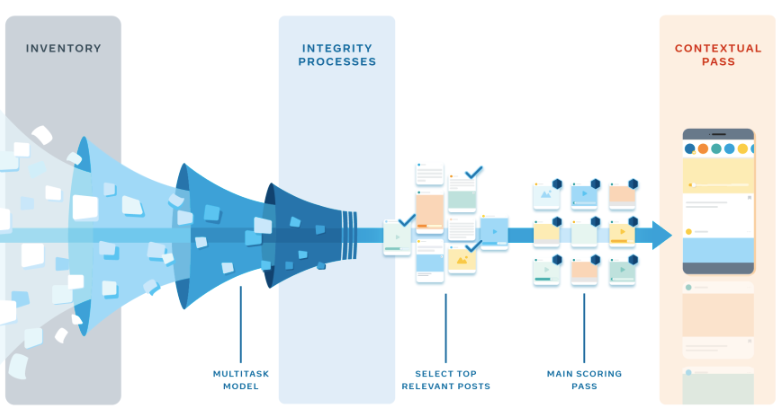
Social media algorithms are all powered by artificial intelligence (AI) in the form of machine learning that incorporates various ranking signals to prioritize and personalize content for each user. A social media algorithm is a set of rules and signals that rank content on a social platform. It organizes content on social feeds based on how likely each individual social media user is to like it and interact with it (Newberry, C., 2024, March 24). This helps to form an algorithmically driven influence.
Throughout U.S. history, Americans have upheld free speech protections as critical to the defense of democracy. However, as an online extremist ecosystem has spread across social media, claims to free speech also have shielded actors that threaten democratic civil society. Social media’s open system enables individual untrusted actors to target individuals en masse without the offline constraints of privacy, negative feedback, and the need to protect their reputation (Stray, Iyer, & Puig Larrauri, 2023, pg. 10). In just the last several years, social media platforms were used to organize a seditious conspiracy, advance white supremacist ideas, and sow disinformation that weakens both civil society and national security (Mathews, Williams & Evans, 2023). The internet and social media platforms are so much more robust and accessible today than they were near the end of the 20th century.
Polarization, violence and social media are inextricably intertwined and social media platforms have mostly responded to the problem of violent conflict through content moderation. These efforts are generally reactive, focusing on specific content or crises and outbreaks of violence (Stray, Iyer, & Puig Larrauri, 2023, pg. 3). There have always been actors who deliberately escalate conflict by heightening the divisions between groups. These have been referred to as “conflict entrepreneurs” or “political entrepreneurs”. Escalating conflict tends to be more destructive when the motivations of actors are more about furthering their own goals, rather than achieving a societal benefit (Stray, Iyer, & Puig Larrauri, 2023, pg. 9). Users often have little indication of the original source of a piece of content and are therefore vulnerable to believing that content in their social feeds are trustworthy. Social proof is a powerful influence and a small number of hyper-engagers can push a narrative to make it seem popular to others, even when a wider silent majority disagrees (Stray, Iyer, & Puig Larrauri, 2023, pg. 11).
According to an article in the Journal of Media Law, Kohl (2024) indicated:
Even though the individual users of social media create their own content, today it is the companies computer algorithms that determine what content will or will not be amplified. Platforms tap into hardwired human sociality which explains the evidence that shows people obtain bigger hits of dopamine [the chemical in our brains highly bound up with motivation and reward] when their social media posts receive more likes. In addition, false news stories [on the then Twitter] were 70 percent more likely to be retweeted than true ones. Most likely because false news has greater novelty value compared to the truth, and provokes stronger reactions especially disgust and surprise . (pg. 5)
The true objective of any algorithm is not easy to detect since there is little transparency by design. This lack of transparency of the underlying algorithms create an environment that resembles a “black-box”. As ethical concerns have peaked recently with the rise of algorithmic media, the opacity of black-box algorithm processes have led to calls for studies on fairness and transparency (Shin, et al., 2022, pg. 1). The “black box model” simply refers to an Artificial Intelligence (AI) model which is so complex that its inner workings are opaque to the human eye.
The most tangible form of AI is machine learning, which includes a family of techniques called deep learning that rely on multiple layers of representation of data and are thus able to represent complex relationships between inputs and outputs (Panch, Mattie, & Atun, 2019, pg. 1). “Decision making” AI models are generating insights that humans can leverage to supplement their judgment. To ensure ethical AI decision making, humans must: avoid overvaluing AI insights, maintain unbiased algorithms, and responsibly employ AI that promotes citizen’s wellbeing (Isley, 2022, pg. 2).
Computer algorithms that make decisions and predictions are often viewed as inherently fair and objective . But in recent years, a competing perspective has emerged indicating that algorithms often encode the biases of their developers or the surrounding society, producing predictions or inferences that are clearly discriminatory towards specific groups (Baker, & Hawn, 2022, pg. 1053). Ultimately, if bias is present in the world it will be present in the data and will be learned in some form by machine learning algorithms.
Social biases may be integrated into algorithms at different stages of algorithmic operations. If an algorithm’s input (i.e., training dataset) is contaminated with the social biases that exist in an organization or society, those biases may emerge in the output of the algorithm (Kordzadeh, & Ghasemaghaei, 2022, pg. 3). Simply hiding or protecting certain variables will not be sufficient for reducing algorithmic bias, for their influence will persist in the data. Algorithmic bias is not just a technical issue. Framing it as such will require an engineering solution (Panch, Mattie, & Atun, 2019, pg. 2). The main objective is to engineer the algorithms so that they do not artificially increase public discourse and conflict.
Conflict is not always inherently bad since it is part of how societies change for the better and is sometimes necessary to achieve justice. It is an essential part of democratic debate, and necessary to hold power to account. Conflict scholars and political theorists have developed a variety of ways of talking about the dual nature of conflict. Talks of “constructive” and “destructive” conflict, noting that, for example, two parties can disagree about methods while agreeing on goals (Stray, Iyer, & PuigLarrauri, 2023, pg. 6). Conflict escalation however, is a long-term process, accompanied by negative changes in society long before the appearance of violence. Arguably, these changes are themselves harmful, but even the limited goal of preventing physical violence requires attention to conflict processes at far earlier stages.
An understanding of conflict escalation dynamics allows an analysis of the role of social media platforms in escalating destructive conflicts, and suggests ways they could be designed to de-escalate conflict. Escalation is a human process, but the architecture of social media platforms can amplify existing conflict dynamics, exacerbating fault lines and reinforcing destructive patterns of behavior (Stray, Iyer, & Puig Larrauri, 2023, pg. 7).
The fundamental weakness of content moderation as a conflict management approach is that it addresses only the most obvious forms of hate speech, coordinated harassment, misinformation and incitement to violence, without considering the processes that escalate conflict to that point which may include algorithm bias. Notably, content moderation practice frequently rebounds on exactly those it is supposed to protect, including women and minorities. These effects work against any strategy that might de-escalate and transform conflict on the platform (Stray, Iyer, & Puig Larrauri, 2023, pg. 15). So if content moderation is not the total solution because the damage has already been done by the time it is detected, then there needs to be an alternative early onset intervention.
One regulatory approach to enforce accountability on social media could include private corporations being penalized for ethically-challenged algorithmic outcomes. Another approach is to require companies to make their algorithm design and outcomes transparent, auditable to third parties, and explainable to individuals impacted by algorithmic decisions (Kordzadeh, & Ghasemaghaei, 2022, pg. 12). Future research may include the use of middleware. Middleware, third-party software that serves as an intermediary between users and platforms, may offer a potentially promising solution to counter the concentrated power of "centralized" social media platform governance. This may help reduce any algorithmically driven influence.
Cited Sources
Isley, R. (2022). Algorithmic Bias and Its Implications: How to Maintain Ethics through AI Governance. NYU American Public Policy Review. Retrieved on January 20, 2025 from https://assets.pubpub.org/o51l24mf/11667160763862.pdf.
Kohl, U. (2024). Toxic recommender algorithms: immunities, liabilities and the regulated self-regulation of the Digital Services Act and the Online Safety Act. Journal of Media Law, 1-35. Retrieved on January 19, 2025 from https://www.tandfonline.com/doi/pdf/10.1080/17577632.2024.2408912.
Kordzadeh, N., & Ghasemaghaei, M. (2022). Algorithmic bias: review, synthesis, and future research directions. European Journal of Information Systems, 31(3), 388-409. Retrieved on January 18, 2025 from https://www.tandfonline.com/doi/abs/10.1080/0960085X.2021.1927212.
Mathews, L.J., Williams, H.J., & Evans, A.T.(2023,October 20). Protecting free speech compels some form of social media regulation. RAND. Retrieved on January 23, 2025 from https://www.rand.org/pubs/commentary/2023/10/protecting-free-speech-compels-some-form-of-social.html.
Newberry, Christina.(2024, March 24). 2024 Social Media Algorithms: A Guide for All Networks. Hootsuite.com. Retrieved on February 28, 2025 from https://blog.hootsuite.com/social-media-algorithm/
Panch, T., Mattie, H., & Atun, R. (2019). Artificial intelligence and algorithmic bias: implications for health systems. Journal of global health, 9(2). Retrieved on January 20, 2025 from https://pmc.ncbi.nlm.nih.gov/articles/PMC6875681/pdf/jogh-09-020318.pdf
Shin, D., Hameleers, M., Park, Y. J., Kim, J. N., Trielli, D., Diakopoulos, N., ... & Baumann, S. (2022). Countering algorithmic bias and disinformation and effectively harnessing the power of AI in media. Journalism & Mass Communication Quarterly, 99(4), 887-907. Retrieved on January 20, 2025 from https://journals.sagepub.com/doi/epub/10.1177/10776990221129245
Stray, J., Iyer, R., & Puig Larrauri, H. (2023). The algorithmic Management of Polarization and Violence on social media. Retrieved on January 24, 2025 from https://escholarship.org/content/qt9vc329zb/qt9vc329zb.pdf.